

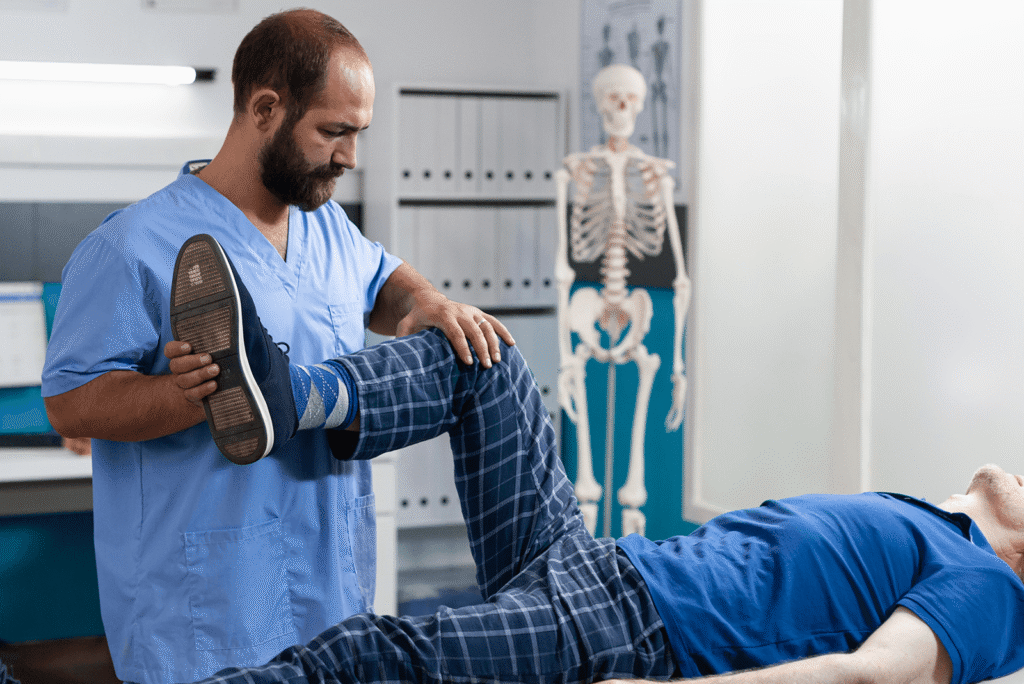
If you’re experiencing pain that starts in your lower back or buttock and travels down one leg, there’s a good chance you’re dealing with sciatica. While it can be painful and frustrating, most cases improve with the right treatment. Physiotherapy is one of the most effective ways to reduce pain, restore movement, and support recovery.
This guide explains the symptoms and causes of sciatica, how physiotherapy can help, and the treatment options available.
What Is Sciatica and What Causes It?
Common Symptoms of Sciatica
Sciatica affects everyone differently, but common symptoms include:
- Shooting or burning pain from the lower back or buttock down one leg.
- Numbness or tingling in the leg or foot.
- Muscle weakness affecting the leg or foot.
- Pain that worsens with sitting, coughing, or sneezing.
- Usually affecting one side of the body.
Common Causes of Sciatica Pain
Sciatica can develop for several reasons, but the most common causes include:
- A herniated or bulging disc pressing on a nerve root.
- Spinal stenosis, a narrowing of the spinal canal.
- Spondylolisthesis, a slipped vertebra in the lower spine.
- Piriformis syndrome, a buttock muscle irritating the nerve.
When Sciatica Needs Urgent Attention
How Physiotherapy for Sciatica Provides Pain Relief
Physiotherapy aims to relieve sciatica by reducing irritation around the nerve, improving movement, and helping prevent symptoms from returning.
- Manual therapy to improve joint and soft tissue mobility.
- Nerve gliding exercises to ease irritation along the sciatic nerve.
- Core and postural exercises to support the lower spine.
- Practical advice on movement, sitting, and daily activities.
Sciatic Nerve Pain Treatment Options Comparison
The right sciatic nerve pain treatment depends on how long your symptoms have lasted.
| Approach | Best For | What It Involves |
|---|---|---|
| Self-care | Mild, recent-onset sciatica | Staying active, gentle stretching, over-the-counter pain relief |
| Physiotherapy | Persistent or recurring sciatica | Manual therapy, targeted exercise, posture and activity advice |
| Medical referral | Severe symptoms or no improvement after several weeks | Imaging, specialist assessment, injections, or surgery |
How Physiotherapy for Sciatica Works at Physio Perfect
Initial Assessment
Personalised Treatment Plan
Ongoing Support
Start Your Recovery with Expert Physiotherapy for Sciatica
Living with sciatica can make everyday activities like walking, sitting or driving uncomfortable, but it doesn’t have to stay that way. At Physio Perfect, our experienced physiotherapists will take the time to understand your symptoms and recommend the treatment that’s right for you, helping to reduce pain, restore movement and prevent your symptoms from returning.
Book your appointment today, and let’s work together to help you move more comfortably and get back to doing the things you enjoy.
Frequently Asked Questions
What does physiotherapy for sciatica involve?
What is the fastest way to get sciatica pain relief?
What are the most common causes of sciatica?
When should I see a physiotherapist for sciatica?
Can sciatica be a sign of something serious?

John Smith
BSc(hons) Pharmacy
GPhC Number: 2061107