
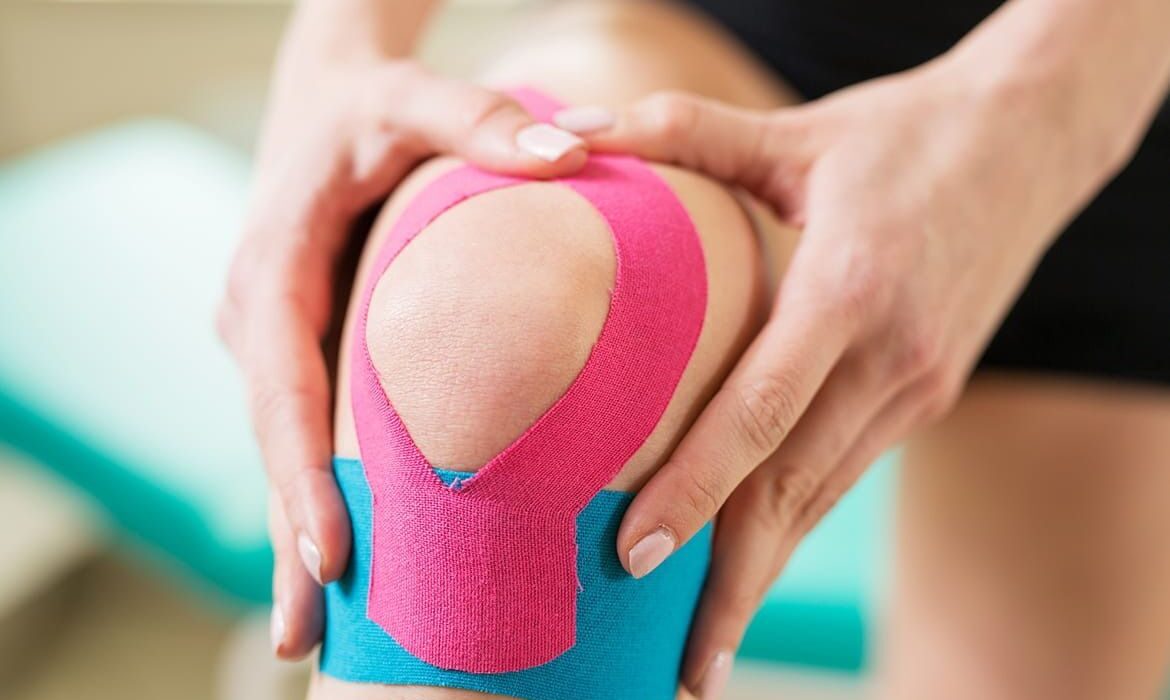
Expert Taping Therapy for Injury Support and Recovery
Types of Taping Therapy We Offer
We use different taping techniques depending on your injury, symptoms, and recovery goals.
Kinesiology Taping Therapy (K-Tape)
Sports Taping Therapy
Rigid Strapping & Joint Support
Postural Correction
Supports proper alignment and reduces strain on overused muscles.
When Taping Therapy Can Help
Taping therapy can support a wide range of musculoskeletal injuries and is tailored to your condition, activity level and recovery goals.
- Ankle and knee sprains.
- Muscle strains, including calf and hamstring injuries.
- Shoulder instability and overuse injuries.
- Tennis elbow and other repetitive strain injuries.
- Mild swelling following injury, supported with kinesiology taping.
- General joint instability during rehabilitation or return to sport.
If your injury requires a more comprehensive rehabilitation programme, we may combine taping with treatments such as manual therapy, exercise rehabilitation, or sports injury physiotherapy.
Benefits of Taping Therapy
Taping therapy provides additional support during recovery while helping you stay active and move with greater confidence.
- Supports Recovery: Helps protect injured muscles and joints.
- Supports Movement: Provides support without unnecessarily restricting mobility.
- Improves Stability: Offers extra confidence during everyday activities and sport.
- Complements Physiotherapy: Works alongside manual therapy and rehabilitation exercises for better long-term results.
Our Approach to Taping Therapy
- Thorough Assessment: Every taping application begins with a thorough assessment to ensure the most appropriate technique is used for your injury and recovery.
- Personalised Taping: We choose the most suitable technique, whether that's kinesiology taping therapy, sports taping therapy, or rigid strapping.
- Integrated Treatment: Taping therapy is combined with rehabilitation exercises and other physiotherapy treatments to support your recovery.
Support Your Recovery with Expert Taping Therapy
Whether you're recovering from an injury, returning to sport or looking for extra support during everyday activities, our experienced physiotherapists are here to help. We welcome patients from Slough, Burnham, East Burnham, Farnham Common, Farnham Royal, Fulmer, Gerrards Cross, Hedgerley, Stoke Poges, Taplow, and the surrounding areas. Book your appointment today and let us help you recover with confidence.